15 octobre 2026

Itap check and foot valves: what really makes the difference

Design, materials, performance and selection criteria: what really sets apart the check and foot valves developed through Itap’s expertise?

Check valves, also known as non-return valves, allow fluid to flow in one direction while preventing reverse flow within the system.

They are well-known components among professionals in the plumbing and HVAC industry. Precisely for this reason, products that appear similar in terms of design and dimensions can easily be considered equivalent.

In reality, the same size does not necessarily mean the same characteristics or the same behaviour within the system.

Design principle, materials, seals, operating pressure and temperature, installation position, minimum opening pressure and pressure drop are all factors that contribute to a check valve’s performance and suitability for a specific application.

Understanding these differences means going beyond dimensional compatibility and selecting a solution that truly matches the operating conditions of the system.

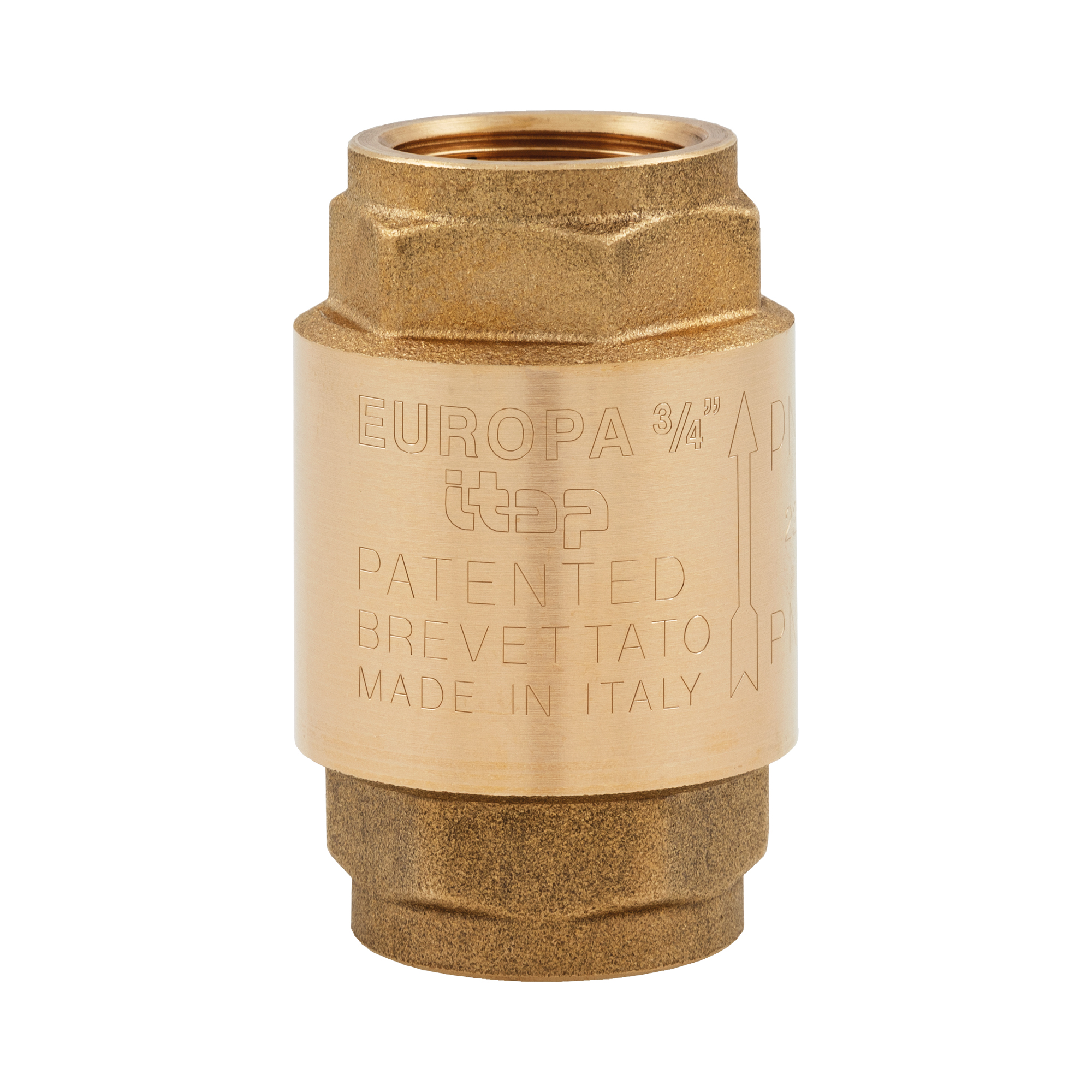
Check and foot valves have always been one of Itap’s flagship product families. This long-standing expertise in innovation and manufacturing is best represented by Europa®, the check valve we invented and patented, which over the years has become one of the brand’s most recognisable products worldwide.

Come scegliere la valvola di ritegno e di fondo corretta.

Three factors to consider when selecting a check valve

1. Design principle

The design of a check valve affects how the product operates and the applications for which it is suitable.
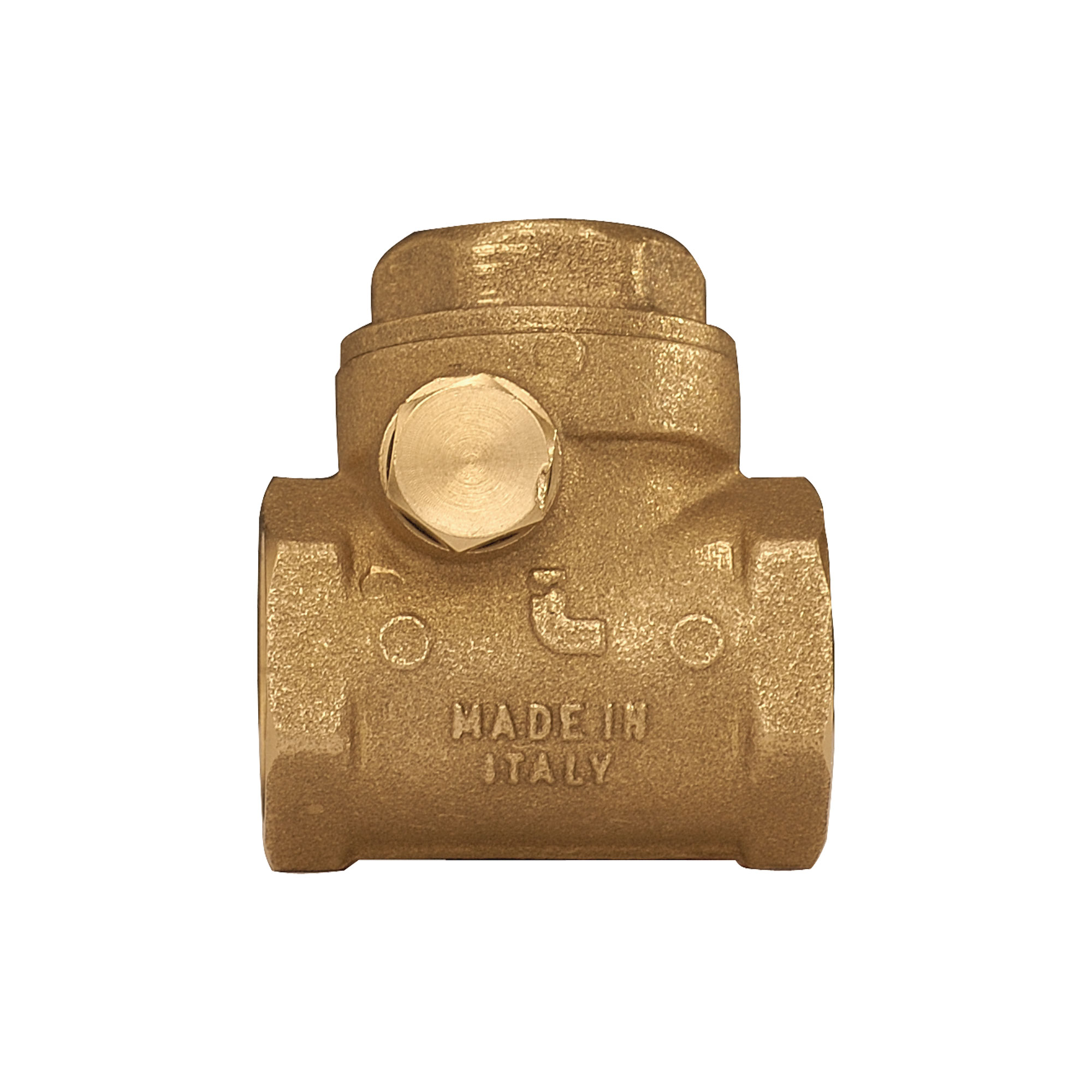
In spring-loaded check valves, the disc is pushed back towards the closed position by a calibrated spring. Swing check valves, on the other hand, use a hinged disc that opens as the fluid flows through the valve and closes when pressure drops or the flow reverses.
Both perform the same basic function, but their different geometries and operating principles can affect how they behave within the system.

2. Seal materials

Another important factor is the material used for internal components and seals. Materials such as NBR, Viton®, stainless steel and polymers are designed for different operating conditions and should be assessed according to the fluid, temperature and pressure involved.

3. Performance factors: installation position, opening pressure and pressure drop

Permitted installation position — vertical, horizontal or inclined — together with the size range and hydraulic performance can also influence the final selection of a check valve.
When apparently similar products seem to offer the same characteristics, parameters such as minimum opening pressure and pressure drop curves become particularly useful. They make it possible to assess how the valve will actually perform under the system’s operating conditions.
For this reason, we provide dedicated technical data sheets and documentation for each product family.

The objective is therefore not to identify one type of valve as universally better than another, but to match design characteristics, technical data and operating conditions in order to select the most suitable non-return valve for the system.

How to choose an Itap check valve: comparing our product ranges

Our range includes several check valve families, each designed to meet different requirements.

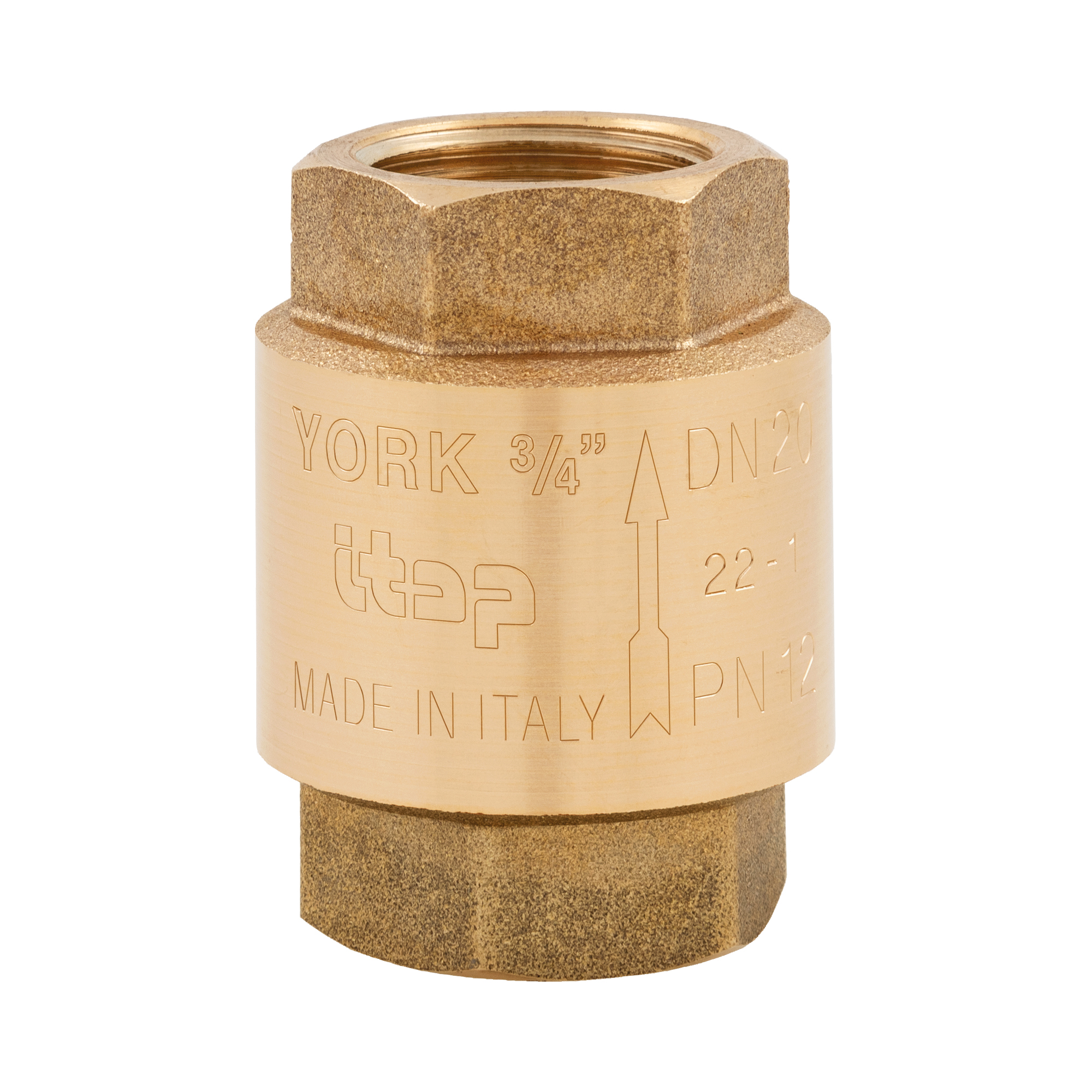
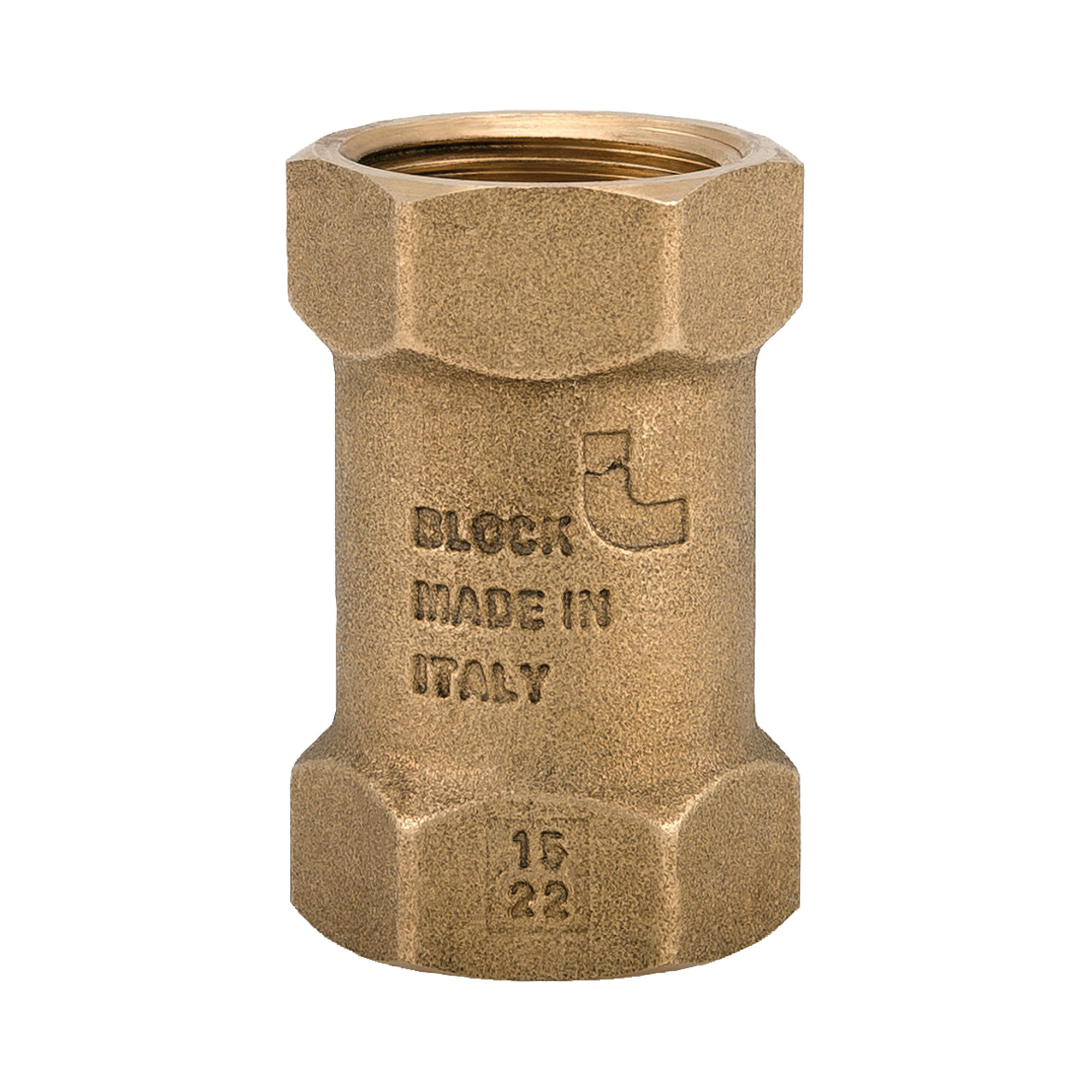
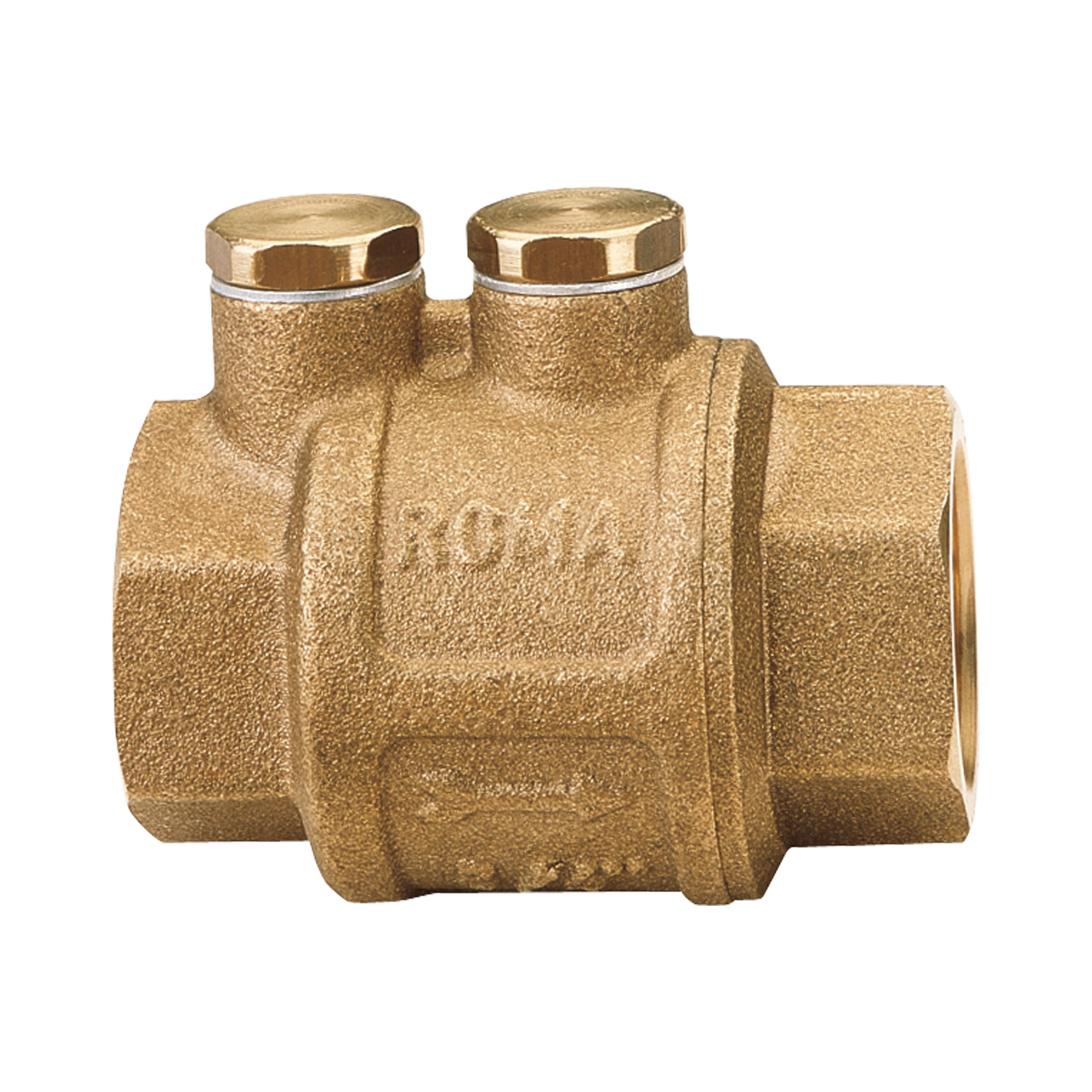
Europa®, York®, Block®, Roma® and Clapet are not simply different versions of the same solution: their construction, materials and fields of application are designed to meet different operating needs.

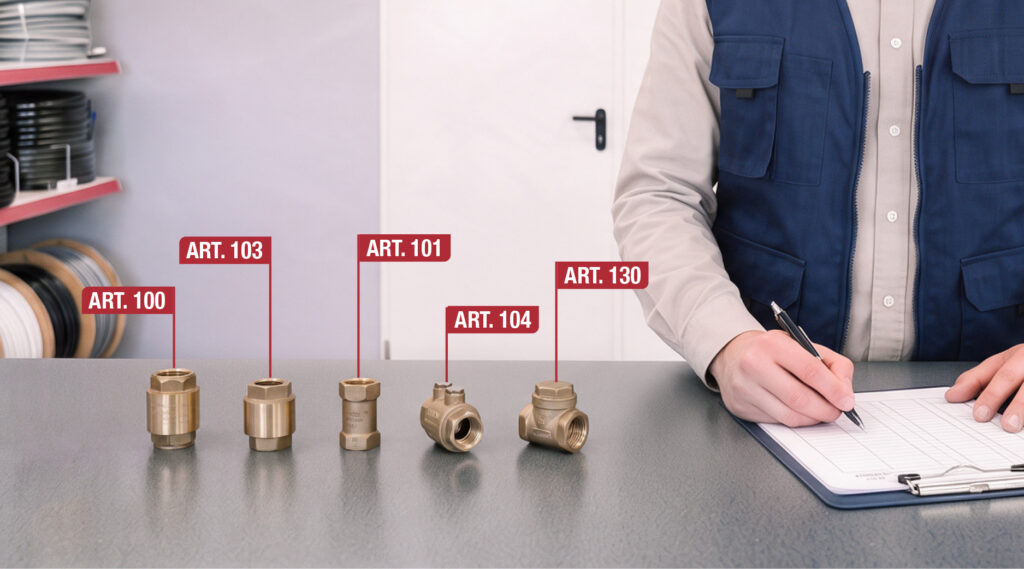
Below is a comparison of the main characteristics of Itap check valves:

RangeMain configurationSize rangeCharacteristicsApplications and installation
Europa® art. 100Stainless steel disc, NBR seal, stainless steel spring.3/8″–4″Operating temperature: -20/+100 °C.

Pressure: from 12 to 25 bar depending on size

Suitable for plumbing, heating, air-conditioning and pneumatic systems. Can be installed in any position: vertical, horizontal or inclined.
York® art. 103Polymer disc, NBR seal, stainless steel spring.3/8″–4″Operating temperature: -20/+100 °C.

Pressure: from 8 to 12 bar depending on size

Suitable for plumbing, heating, air-conditioning and pneumatic systems. Can be installed in any position: vertical, horizontal or inclined.
Block® art. 101Polymer disc, NBR O-ring, stainless steel spring.1/2″–2″Operating temperature: -20/+100 °C.

Pressure: from 10 to 12 bar depending on size

Suitable for plumbing, heating, air-conditioning and pneumatic systems. Can be installed in any position: vertical, horizontal or inclined.
Roma® art. 104Stainless steel disc, Viton® seal, stainless steel spring.3/8″–2″Minimum temperature: -20 °C.

Maximum temperature: 100 °C with water and 150 °C with liquid hydrocarbons or compressed air.

Pressure: from 18 to 25 bar depending on size

Suitable for plumbing, heating, air-conditioning and pneumatic systems. Can be installed in any position: vertical, horizontal or inclined. Also suitable for petrol and fuels in general.
Clapet art. 130Brass hinged disc; available with metal or NBR seat.Up to 4″ with metal seat; up to 2″ with NBR seat.Operating temperature: 0/+90 °C.

Pressure: 8–16 bar depending on size and seat material

Suitable for plumbing systems. To be installed horizontally, with the socket facing upwards.

The comparison shows that there is no single parameter that determines the correct choice. Key factors include:

  • pressure rating and size range;
  • fluid, temperature and seal materials;
  • application and permitted installation position.

The technical data sheets for each family provide all the information required for a detailed comparison.

Valvole di ritegno Itap


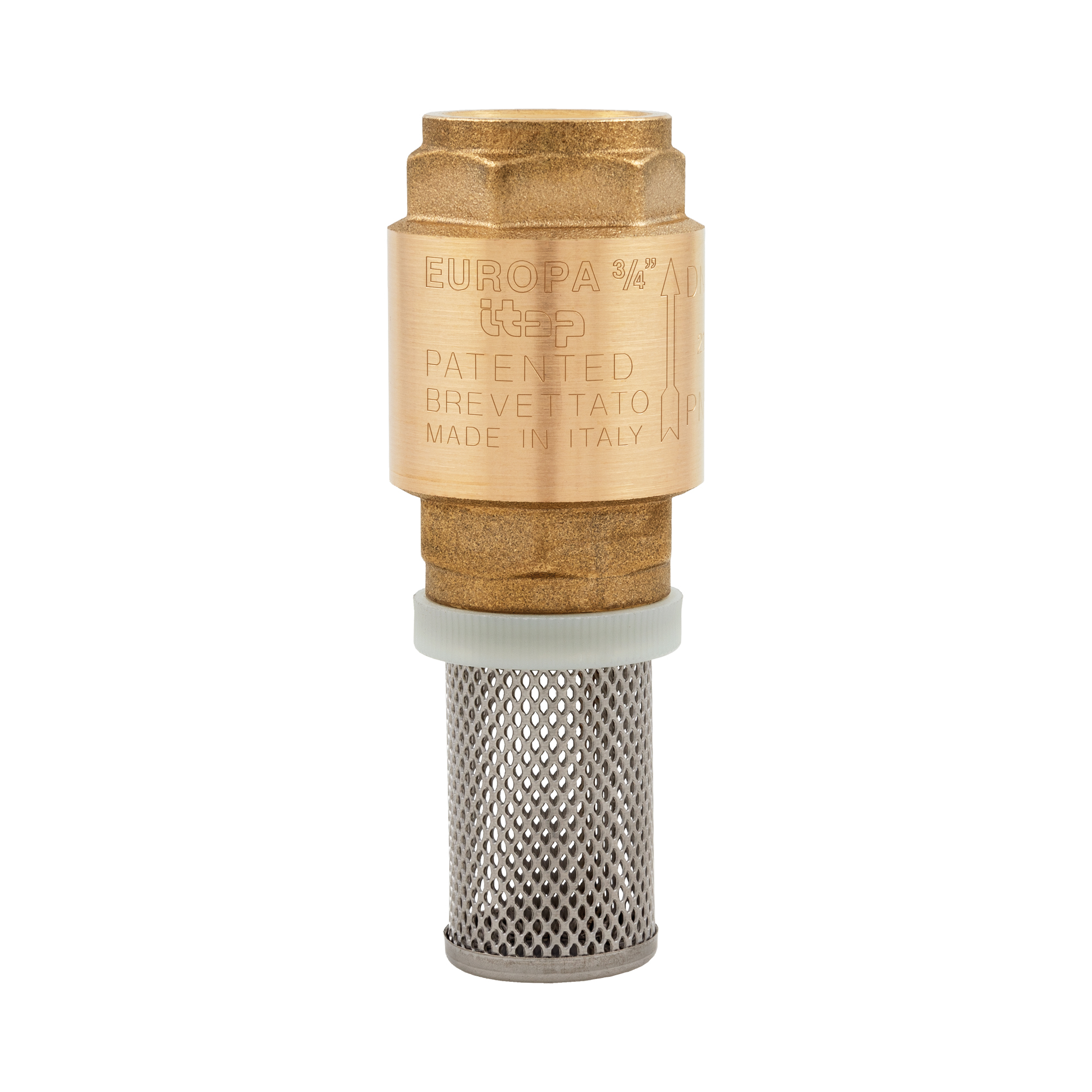
Europa® check valve: the original invented and patented by Itap

Within our range, Europa® holds a central place in our history.

The valve was developed in response to the need for a solution capable of overcoming some of the limitations of the check valves available on the market at the time. Years of development, testing and refinement led us to create a new spring-loaded check valve design, which was subsequently patented.

This is how Europa® was born: a solution destined to become one of our company’s signature products and a recognised benchmark across international markets.

Its international success has accompanied our growth in markets around the world and has helped establish the Itap brand as a recognised name in check and foot valves. This recognition is based not only on the original design, but also on the consistency with which we have developed and manufactured Europa® valves over the years.

The success of the product has also led to the appearance, in several markets, of products that imitate its appearance, certain construction features and, in some cases, even its name and packaging.

External similarity, however, does not tell the whole story when it comes to valve quality.

Materials, machining, tolerances, quality controls and manufacturing know-how are as much a part of the product as its geometry.

This is where the difference between a product that resembles Europa® and the original solution developed and patented by us becomes particularly significant.

Europa® valves: 100% Made in Italy

Europa® valves are designed, manufactured and tested at our facilities in Italy before being prepared for shipment to international markets.

100% Made in Italy is therefore more than simply a statement of origin. It reflects the continuity of a manufacturing process that allows us to retain design expertise, production know-how and quality control in-house.

From the original concept to the finished product supplied to distributors and professionals around the world, Europa® continues to follow the same path that has made it one of the Itap brand’s most recognisable products.

Valvola di ritegno Europa di Itap. Completamente Made in Italy.


Foot valves: when non-return protection also requires filtration

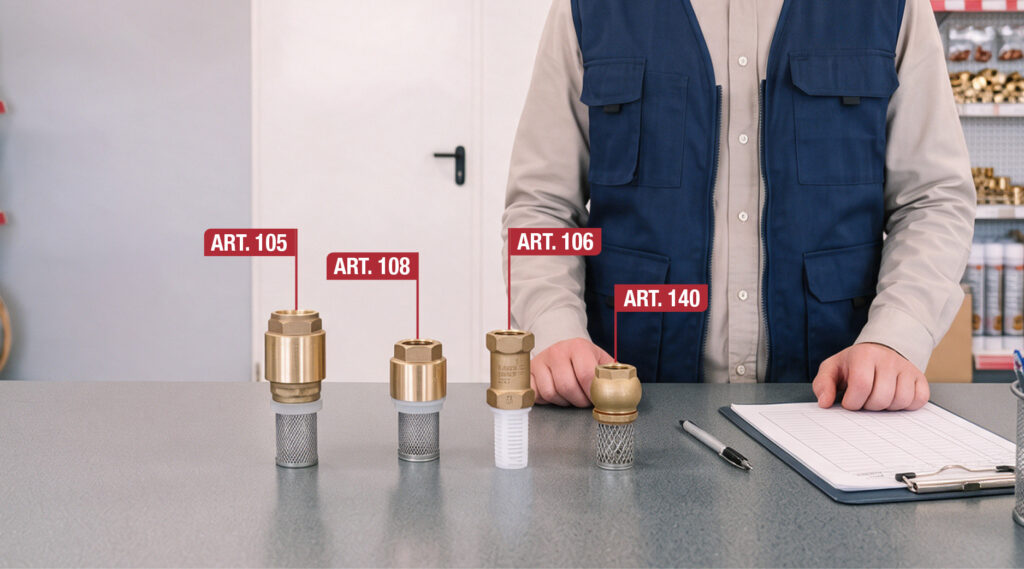
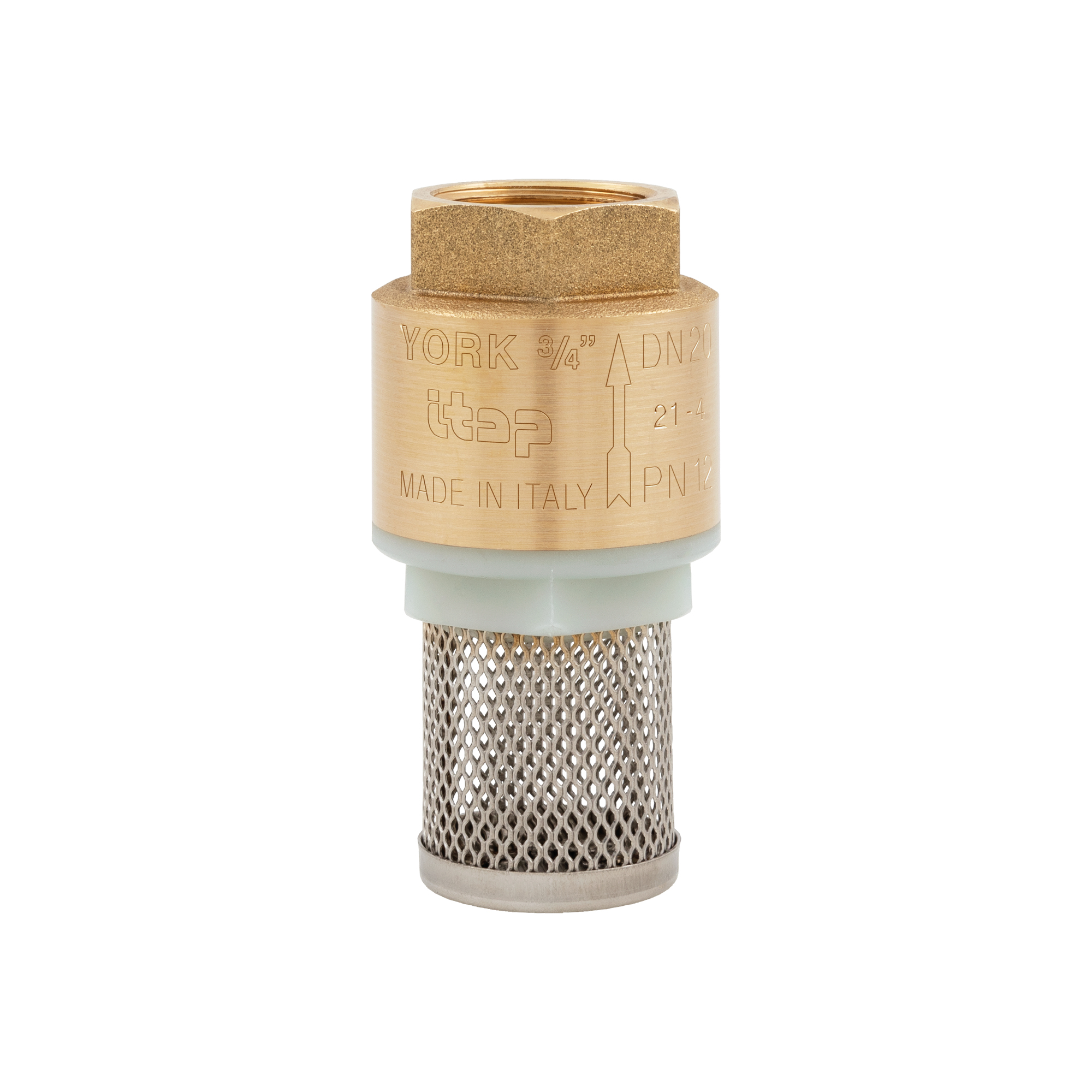
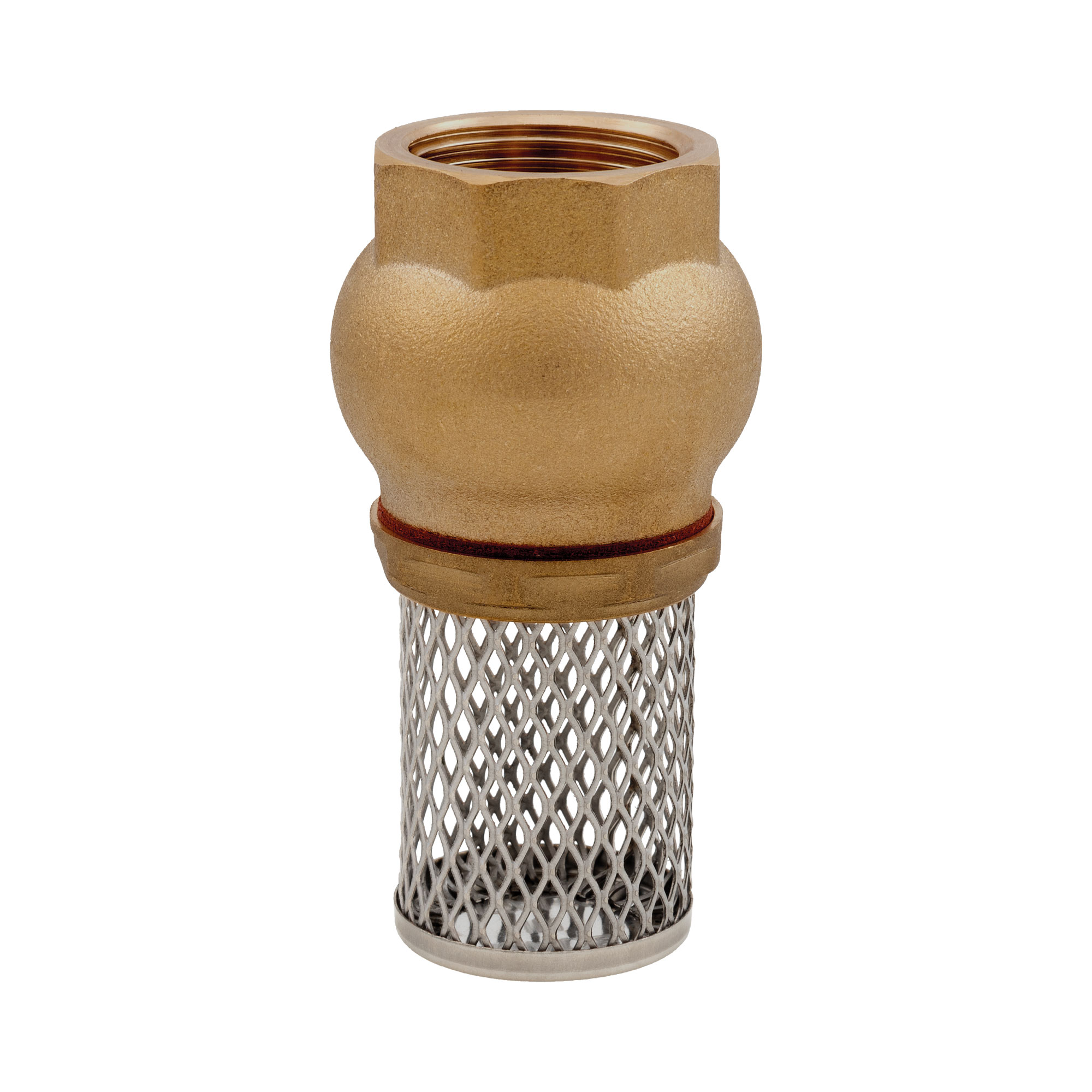
The same product quality is reflected in our foot valves, where the non-return function is combined with filtration.

Used in suction systems, these solutions incorporate a strainer that helps prevent debris and impurities from entering the circuit.

Here too, selection must take the actual operating conditions into account, including fluid characteristics, materials, dimensions, suction conditions and the required degree of filtration.

The Itap range includes several configurations, including Europa®, York® and Block® foot valves, together with other dedicated solutions like foot valve.

Each family retains its own construction characteristics while incorporating dedicated filtering elements, making it possible to select the solution that best matches the requirements of the suction system.

Valvole di fondo Itap

Discover the Itap range

Would you like to take a closer look at the Itap range of check and foot valves?

From Europa® to  York®, Block®, Roma®, Clapet, as well as our different valvole di fondo solutions, explore the technical characteristics of each Itap range and identify the configuration that best suits your system requirements.

Browse the complete range and technical documentation, or contact our team for further information on the solutions best suited to your application.


FAQ

What is the difference between a check valve and a non-return valve?

There is no difference. Check valve and non-return valve are two terms for the same type of component, designed to allow fluid to flow in one direction while preventing reverse flow.

What is the difference between a check valve and a foot valve?

A foot valve is a check valve fitted with a strainer and installed at the end of a pump suction line. It helps maintain pump prime while preventing debris and impurities from entering the system.

Can a check valve be installed vertically?

It depends on the model. Itap Europa®, York®, Block® and Roma® spring-loaded check valves can be installed in any position: vertically, horizontally or inclined.

Which check valve should be used with diesel fuel or petrol?

For hydrocarbons and fuels, Roma® is the appropriate solution within the Itap range. It features a Viton® seal and can operate at temperatures of up to 150 °C with liquid hydrocarbons or compressed air.


EN ÉVIDENCE